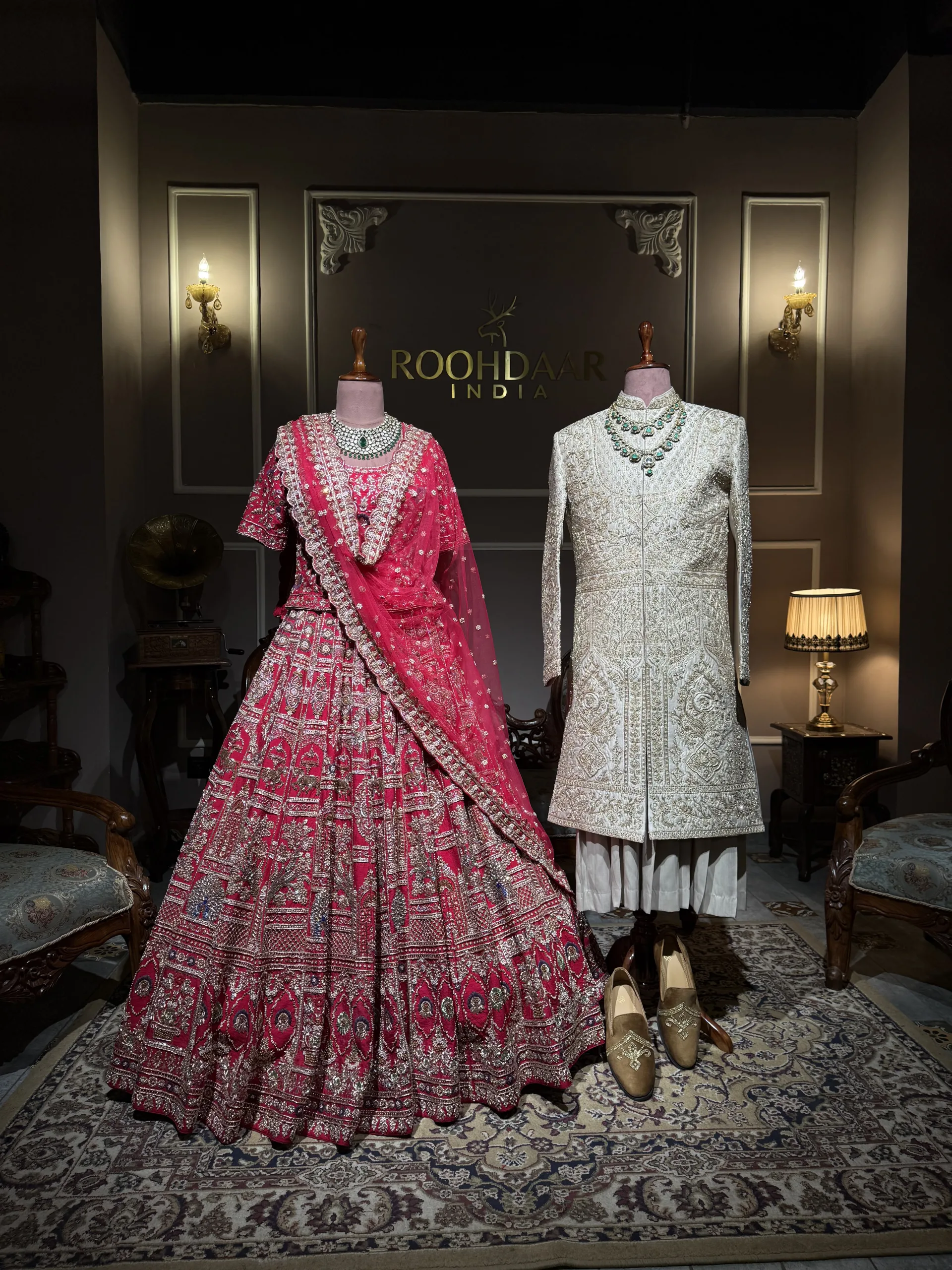
Planning wedding outfits as a couple involves more than choosing a beautiful lehenga or sherwani. You need to consider the wedding functions, fitting, comfort, styling, rental terms, accessories, collection dates, and return requirements.
For couples in Chandigarh and nearby Mohali, wedding outfit rental can make premium wedding fashion more accessible while reducing the cost and storage involved in purchasing outfits. However, the rental experience becomes much easier when you know exactly what to check before booking.
This wedding outfit rental checklist for Chandigarh couples covers the key steps to help you choose, try, book, and prepare your outfits with fewer last-minute surprises.
Wedding Outfit Rental Checklist at a Glance
Before confirming your rental, make sure you have checked:
- Wedding functions and outfit requirements
- Bride’s lehenga or other bridal outfit
- Groom’s sherwani or wedding attire
- Couple outfit coordination
- Correct measurements and fitting
- Comfort and ease of movement
- Footwear and accessories
- Rental price and included items
- Alteration and fitting policies
- Cleaning and maintenance standards
- Collection and return dates
- Security deposit and damage terms
- Final trial before the wedding
- Emergency contact or support details
Now, let us look at each point in detail.
1. List Every Wedding Function First
Before visiting a rental store, create a list of all the functions where you need an outfit.
Depending on your wedding plans, this could include:
- Engagement
- Mehndi
- Sangeet
- Haldi
- Wedding ceremony
- Reception
- Cocktail or evening celebration
- Pre-wedding functions
You do not necessarily need a completely different outfit for every event. However, knowing your schedule helps you decide where you want a statement look and where a simpler outfit may be more practical.
For each function, note:
- Date
- Time
- Venue
- Dress code or theme
- Bride’s outfit
- Groom’s outfit
- Accessories required
This gives you a clear wedding outfit rental checklist before you start shopping.
2. Decide Which Outfits You Want to Rent
Once your functions are listed, decide what each of you needs.
For the bride
Depending on the occasion, options may include:
- Bridal lehenga
- Engagement lehenga
- Reception lehenga
- Designer gown
- Party outfit
- Traditional outfit
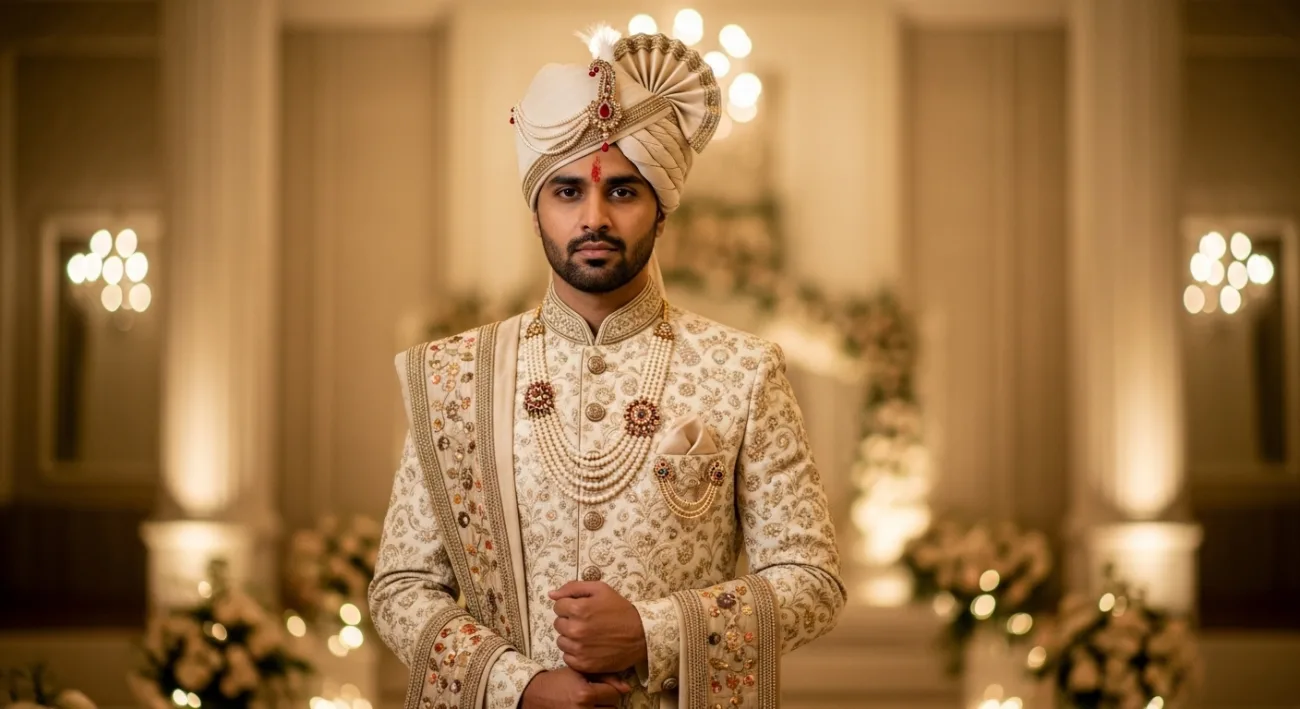
For the groom
Common rental options include:
- Sherwani
- Indo-Western outfit
- Wedding kurta set
- Reception outfit
- Formal ethnic wear
Renting allows couples to explore premium designs without committing to the full purchase price. This is particularly useful for outfits that may only be worn once.
3. Set a Realistic Couple’s Outfit Budget
Do not look at the rental price alone.
Your overall outfit budget may include:
- Bride’s outfit rental
- Groom’s outfit rental
- Dupatta or stole
- Footwear
- Jewellery
- Turban or safa
- Brooch or other accessories
- Alterations
- Security deposit
- Additional rental days, if applicable
Ask the rental provider exactly what is included in the quoted price.
A lower initial rental price does not necessarily mean better value if essential accessories, alterations, or additional charges are excluded.
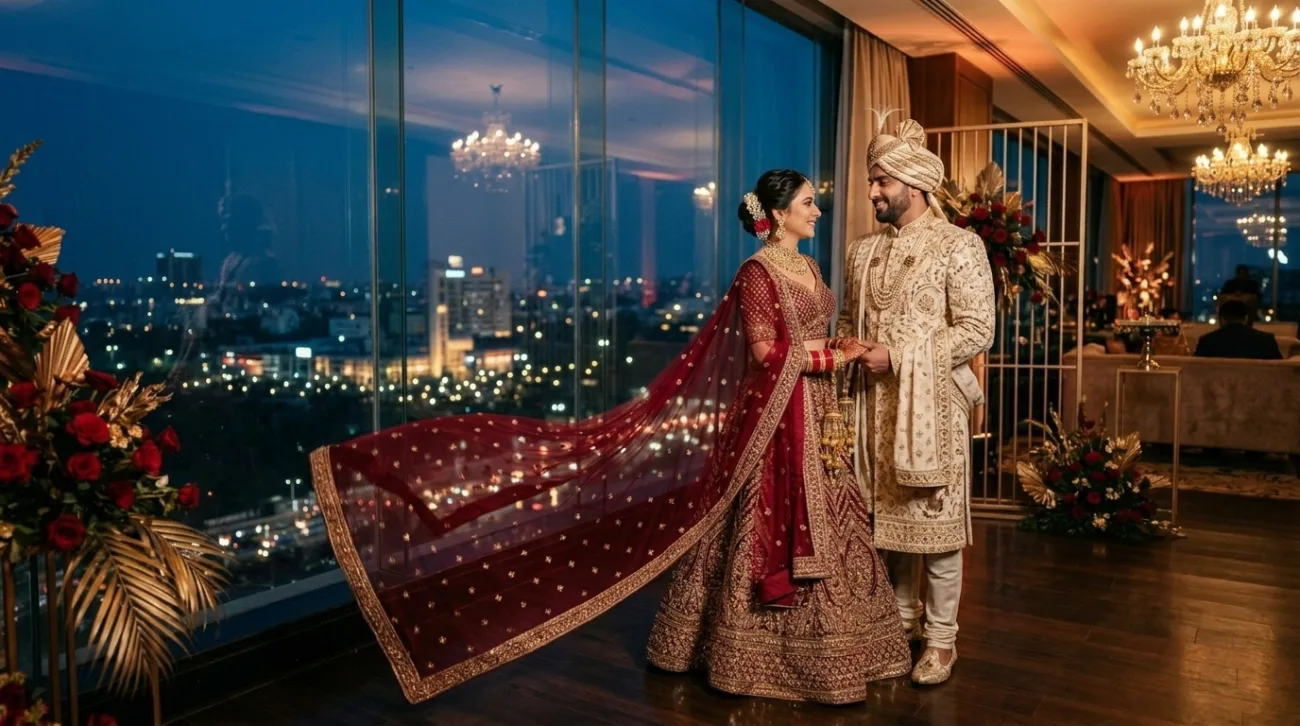
4. Choose Outfits That Work Together
Your outfits do not need to be identical.
Instead, look for visual harmony through:
- Similar levels of formality
- Complementary design details
- Coordinated embellishment
- Similar traditional or contemporary styling
- Balanced silhouettes
- Accessories that connect both looks
Bring a photograph of your partner’s shortlisted outfit when visiting the rental store. This can make coordination much easier.
The goal is to create two individual looks that feel connected when photographed together.
5. Prioritise Fit Over Appearance Alone
A beautiful rental outfit can still look disappointing if it does not fit properly.
For the bride, check:
- Blouse fitting
- Waist fitting
- Lehenga length
- Shoulder comfort
- Sleeve fitting
- Dupatta placement
- Ease of movement
For the groom, check:
- Shoulder fit
- Chest fitting
- Collar comfort
- Sleeve length
- Trouser length
- Sherwani length
- Ease of movement
Proper fitting is especially important for rental outfits because you are selecting from an existing collection rather than purchasing a newly made garment. A proper trial and accurate measurements can help identify adjustments early.
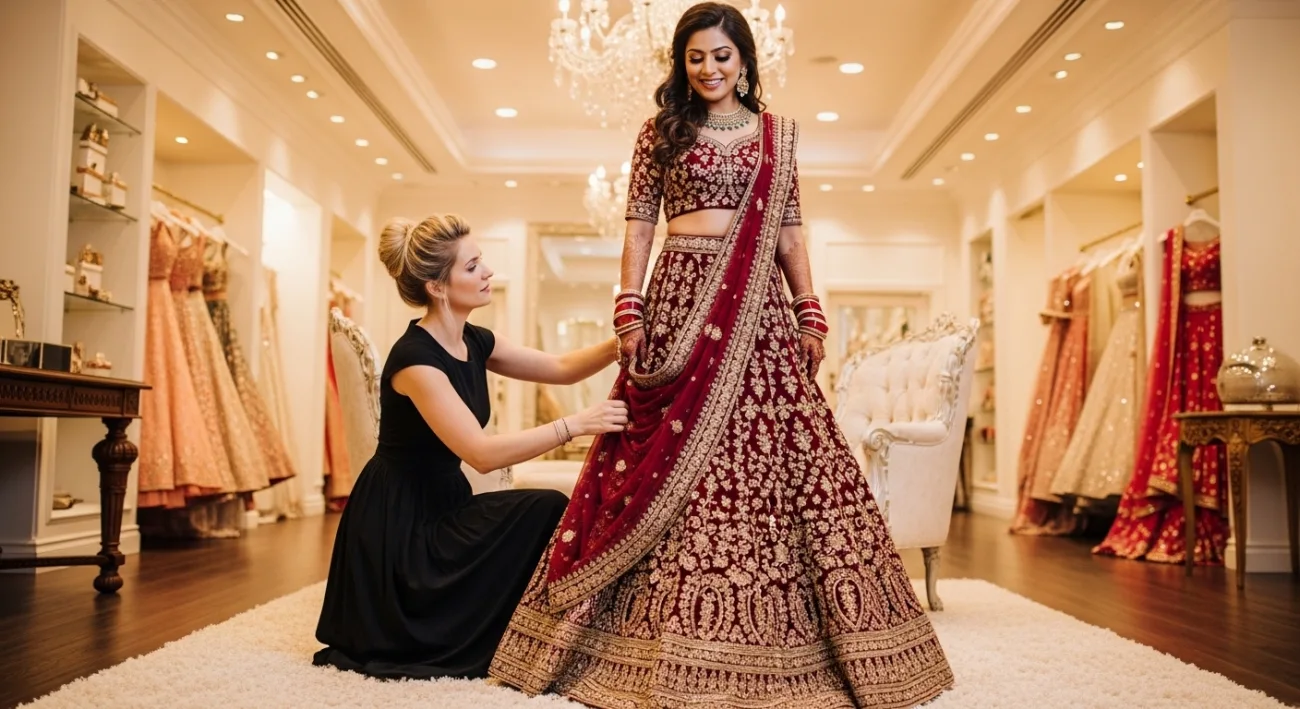
6. Always Schedule a Proper Trial
Never finalise a wedding outfit based only on photographs.
During your trial, do more than stand in front of a mirror.
Try:
- Walking
- Sitting
- Standing
- Turning
- Raising your arms
- Checking the outfit from different angles
- Wearing the planned footwear
- Testing the dupatta or stole placement
For the groom, check whether the sherwani remains comfortable while sitting and moving.
For the bride, check whether the lehenga allows comfortable movement throughout a long wedding function.
A trial is also useful for checking how the complete silhouette appears in photographs.
7. Take Your Wedding Footwear to the Trial
Footwear can significantly affect outfit length and overall proportions.
For the bride, bring the heels or footwear you expect to wear with the lehenga.
For the groom, bring the shoes or juttis planned for the wedding.
This allows the rental team to assess:
- Lehenga length
- Trouser length
- Sherwani proportions
- Walking comfort
- Overall silhouette
It is much better to identify a length issue during the trial than on the wedding day.
8. Check Whether Alterations Are Available
Ask the rental provider:
- Are minor alterations included?
- What measurements can be adjusted?
- How many fitting sessions are available?
- When should alterations be completed?
- What happens if the final fit is still incorrect?
- Is there a size exchange option?
Do not assume every rental store follows the same alteration policy.
Getting these details confirmed before booking gives you greater control over the final fit.
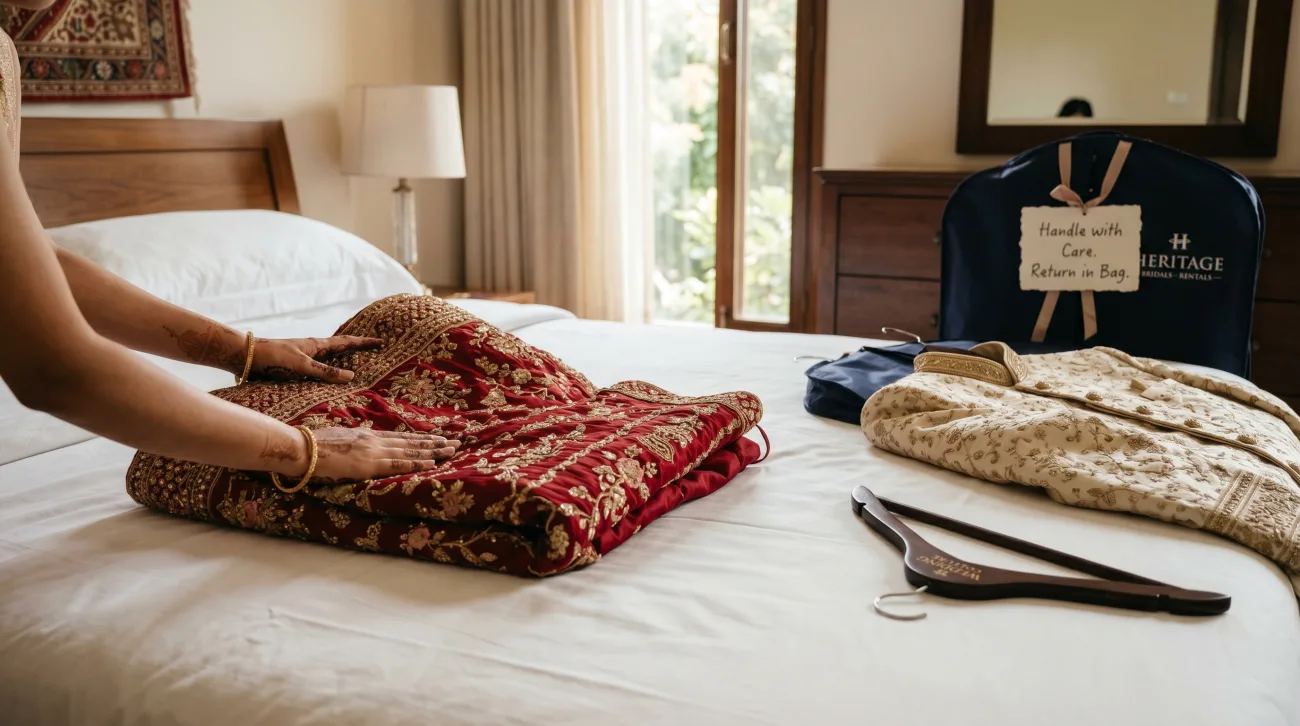
9. Check the Outfit Condition Carefully
Before accepting a rented outfit, inspect it properly.
Look for:
- Loose embroidery
- Missing embellishments
- Stains
- Damaged seams
- Broken hooks or fasteners
- Torn lining
- Fabric damage
- Marks around collars or sleeves
If you notice an existing issue, tell the rental provider before taking the outfit.
This is particularly important for heavily embellished bridal lehengas and structured sherwanis.
A professional rental process should include proper inspection and maintenance before the outfit reaches the customer.
10. Ask What Is Included With the Outfit
A wedding outfit may appear complete in photographs but have separate accessories.
Before booking, ask whether the rental includes:
- Dupatta
- Stole
- Safa or turban
- Brooch
- Belt
- Jewellery
- Belt or waist accessories
- Matching footwear
- Other styling pieces
If an accessory is not included, add its cost to your overall wedding outfit budget.
11. Understand the Rental Terms
Read the rental agreement before making the final payment.
Check:
- Rental duration
- Collection date
- Return date
- Late return charges
- Security deposit
- Damage policy
- Stain policy
- Cancellation terms
- Alteration policy
- Replacement charges, if applicable
Do not rely solely on verbal information.
Clear rental terms help both the couple and the rental provider avoid misunderstandings later.
12. Confirm the Collection and Return Schedule
Your outfit checklist should include logistics, not just fashion.
Confirm:
- When you can collect the outfit
- Whether final fitting happens before collection
- Whether someone else can collect it on your behalf
- Where the outfit should be returned
- The exact return deadline
- What happens if your wedding schedule changes
If your wedding involves travel outside Chandigarh, allow enough time for collection and transportation.
13. Consider Chandigarh’s Weather and Wedding Venue
Comfort matters throughout the wedding day.
Think about:
- Indoor or outdoor venue
- Day or evening function
- Season
- Wedding duration
- Amount of walking
- Dancing or other movement
- Fabric weight
- Layering
A heavily structured outfit may look impressive but become uncomfortable if you need to wear it for several hours.
Choosing an outfit according to the season and venue can make a significant difference to your overall experience.
14. Coordinate Your Accessories Before the Wedding
Do not leave accessories until the final week.
Create a separate accessory checklist.
Bride
- Jewellery
- Footwear
- Hair accessories
- Dupatta styling
- Hand accessories
- Clutch or potli
Groom
- Safa or turban
- Brooch
- Stole
- Mojari or jutti
- Pocket accessories
- Other traditional details
Try important accessories during your final outfit trial so you can see the complete look rather than evaluating each item separately.
15. Take Photos During the Trial
Photos can reveal details that you may overlook in person.
Take photographs from:
- Front
- Side
- Back
- Full length
- Sitting position
- Walking position
Also take a few photographs together.
This helps you assess:
- Outfit proportions
- Fitting
- Silhouette
- Couple coordination
- How the outfits appear together
It can also make it easier to compare two or three shortlisted outfits before making your final decision.
16. Book Early, Especially During Wedding Season
Popular rental outfits can be booked quickly during busy wedding periods.
Starting early gives you more time for:
- Comparing designs
- Trying multiple outfits
- Completing alterations
- Coordinating with your partner
- Arranging accessories
- Scheduling the final fitting
For peak wedding periods, booking your trial and preferred outfit well in advance can help you avoid limited availability. Roohdaar’s existing guidance also recommends early planning for rental outfits during high-demand periods.
17. Complete a Final Couple’s Trial
A final trial should not be treated as optional.
Ideally, both partners should check their complete outfits together before the wedding.
Confirm:
- Final fitting
- Footwear
- Accessories
- Dupatta or stole placement
- Comfort
- Movement
- Outfit condition
- Collection details
This is the final opportunity to identify something that needs attention.
Wedding Outfit Rental Checklist for Chandigarh Couples
Before you leave the rental store, use this quick checklist:
Planning
- Wedding functions listed
- Outfit requirements decided
- Couple’s budget established
- Preferred styles shortlisted
Bride
- Lehenga or outfit selected
- Blouse fitted
- Lehenga length checked
- Dupatta styling confirmed
- Footwear tested
- Accessories arranged
Groom
- Sherwani or outfit selected
- Shoulder and chest fitting checked
- Sleeve and trouser length checked
- Footwear tested
- Safa, stole and accessories arranged
Rental Details
- Rental price confirmed
- Included items confirmed
- Alteration policy checked
- Security deposit understood
- Damage policy understood
- Collection date confirmed
- Return date confirmed
- Late return terms checked
Final Preparation
- Final trial completed
- Couple photographs taken
- Outfit condition checked
- Accessories packed
- Emergency kit prepared
Why Couples Choose Wedding Outfit Rentals in Chandigarh
Wedding outfit rental gives couples an opportunity to explore premium fashion without necessarily purchasing expensive outfits that may remain unused after the celebration.
For Chandigarh and Mohali couples, a good rental experience should combine style, fitting, convenience, maintenance, and transparent rental terms.
Roohdaar India offers bridal lehengas, sherwanis and other wedding outfits with consultation, trials and rental support, making it an option for couples planning their wedding wardrobe in the Chandigarh and Mohali region.
If you are planning your wedding outfits, visiting a rental studio together can also make coordination easier. You can compare silhouettes, assess fitting, and see how both outfits work as a complete couple’s look.
Frequently Asked Questions
Yes. Renting can be a practical choice for couples who want premium wedding attire without purchasing expensive outfits for one-time or occasional use. It can also provide access to a wider range of styles within a controlled budget.
It is better to begin the search once your wedding functions and dates are confirmed. Starting early gives you more time for outfit selection, trials, alterations, accessories and final preparation. During peak wedding periods, early booking is particularly useful.
Ideally, yes. Choosing together makes it easier to coordinate the overall style, level of formality and visual appearance of both outfits. You do not need matching outfits, but the two looks should feel harmonious.
Check the fit, length, comfort, movement, footwear compatibility, silhouette and accessories. Walk, sit and move around in the outfit rather than only checking how it looks while standing.
Ask about the rental price, included accessories, fitting and alteration options, rental duration, collection and return dates, security deposit, damage policy, cancellation terms and any additional charges.
Yes. Some wedding outfit rental stores offer options for both brides and grooms, which can make couple coordination, trials and outfit planning more convenient.
Final Thoughts
The best wedding outfit rental experience starts with planning, not simply choosing the most attractive outfit.
For Chandigarh couples, the ideal approach is to shortlist outfits early, set a realistic budget, attend proper trials, check fitting and comfort, coordinate both looks, understand rental terms and confirm collection and return details.
Use this wedding outfit rental checklist before booking and you can approach your outfit selection with greater confidence and far less last-minute stress.
If you are looking for bridal lehengas, sherwanis or coordinated wedding outfits on rent in Chandigarh and Mohali, consider arranging a consultation and trial before making your final selection with Roohdaar India.